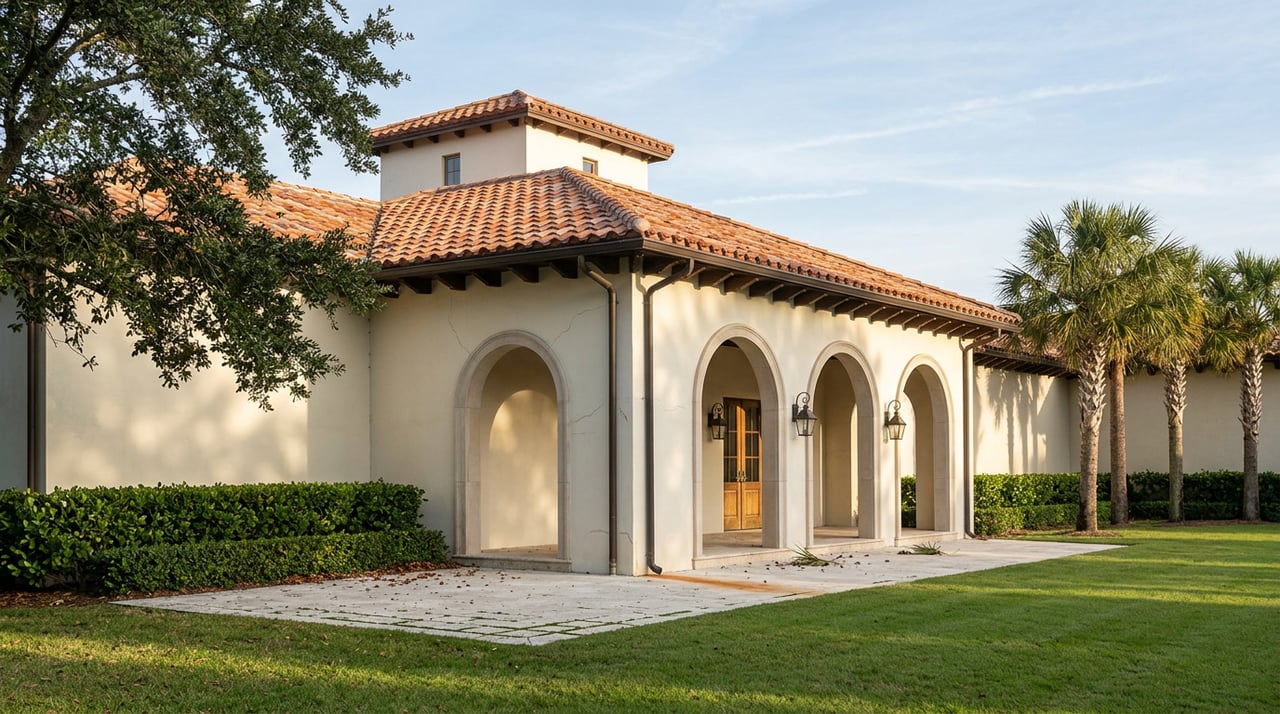
In July 2026, the members of Sea Oaks voted on whether to tear down their oceanfront gazebo and rebuild it as a two-story structure, part of a $6.5 million beach club remodel. The vote passed, 328 to 194. Opponents needed 40 percent to trigger a bylaw provision that would have stalled the project. They got 37 percent. Monthly maintenance fees at the roughly 620-home community are now set to rise by about $80, though the club itself acknowledged that figure could climb depending on financing conditions. One resident, who asked not to be named, put the real objection plainly: the project had been sold as though Sea Oaks belonged in the same conversation as John's Island and Grand Harbor, "which both have beautiful beach clubs, but we're not."
That vote is not an isolated skirmish. It is a snapshot of what's happening at nearly every club community on Vero Beach's barrier island right now, and it's the piece of the puzzle that doesn't show up in a listing description or a portal's HOA field. If you're comparing John's Island to the island's other club communities, the number that matters most isn't the initiation fee or the published dues sheet. It's where that specific club sits in its own capital cycle, and whether membership comes bundled with the home or sold to you separately.
Every Club on the Island Is Mid-Renovation
Local reporting from earlier this year put a figure on the pattern: Vero Beach's private clubs have spent or budgeted $150 million or more on improvements since 2020, a wave that local coverage has tied directly to the pandemic-era migration into smaller, outdoor-oriented communities. Grand Harbor is the clearest example of how fast this can move. Its membership grew from 586 to 1,120 since early 2021, and that growth funded a virtuous cycle of new work. In April 2026, members approved $36 million for a full clubhouse renovation and a new wellness center called The Cove, on top of earlier golf course and beach club upgrades. By the time the clubhouse is finished, the club will have put roughly $65 million into capital projects over seven years.
Quail Valley put $10 million into a nine-month renovation of its golf clubhouse, expanding it to 27,500 square feet. Orchid Island rolled out a $10 million first phase covering golf course work, a clubhouse expansion, and new pickleball and croquet facilities, with club leadership signaling a second phase of similar size was already taking shape behind it. The Moorings took a lighter touch, a $2 million refresh completed in the summer of 2022 that traded "outdated, honey-toned stained wood" for a brighter coastal palette, according to the designers who worked on it.
Here's how the current round of projects compares:
| Club | Recent Capital Work | Investment | What It Means for Members |
|---|---|---|---|
| Sea Oaks | Beach club and gazebo rebuild | $6.5M, approved July 2026 | Monthly fees rising roughly $80, with financing conditions that could push the number higher |
| Grand Harbor | Clubhouse renovation plus new wellness center | $36M approved, $65M total since 2020 | Funded by a membership base that has nearly doubled since 2021 |
| Quail Valley | Golf clubhouse renovation | $10M over 9 months | Completed; folded into existing dues structure |
| Orchid Island | Golf course, clubhouse, pickleball and croquet additions | $10M phase one, another $10M signaled | A second phase was in early planning as of the club's own announcement |
| The Moorings | Clubhouse refresh | $2M over two years | Completed 2022; club is not a mandatory-membership community |
The pattern is an arms race, and the clubs involved talk about it that way themselves. One of Vero's most active club architects, Peacock + Lewis, has now touched The Moorings' clubhouse, Quail Valley's golf clubhouse and Royal Palm Pointe facility, Orchid Island's golf clubhouse, Grand Harbor's beach club, and the Sea Oaks project currently underway. When the same firm is doing the same kind of work at five different clubs inside a few years, that's not coincidence. It's competitive necessity.
Why John's Island Keeps Getting Named as the Standard
What's notable about the Sea Oaks dispute is who got named as the bar to clear. Not a generic "other clubs." John's Island, specifically, twice: once by club management framing the renovation as necessary to stay competitive with it, and once by a dissenting resident invoking it as the standard Sea Oaks was falsely claiming to meet.
That's consistent with how John's Island functions in this market. Founded in 1969 by a group of industry leaders from the Midwest and Northeast looking for a private retreat, the club today includes three golf courses, a full beach club along three miles of Atlantic frontage, and tennis, pickleball, squash and croquet facilities. Membership is by invitation, which is a different mechanism entirely from the pay-to-play model at some of the newer or more recently overhauled clubs. Published figures on cost aren't available directly from the club, but the numbers that circulate publicly, an initiation fee historically cited around $125,000 with recent estimates suggesting it may now exceed $200,000, and annual dues estimated in the $20,000 to $40,000 range, put John's Island at the high end of what's being asked anywhere on the island, even before you've bought a house.
That's worth sitting with. John's Island isn't in the middle of a renovation announcement this year. It doesn't need one to stay the reference point. Everyone else's capital project gets measured against it anyway.
The Part of the Cost That Doesn't Show Up in the Listing
Here's the mechanism that actually matters for anyone comparing neighborhoods rather than just comparing home prices: at some communities, buying the house and joining the club are the same transaction. At others, they aren't.
The Moorings is explicit about this. Its own materials describe it as "not a mandatory membership community," meaning you can own real estate there without ever joining the club, and its published dues, a Full membership at $14,950 a year and a Club membership at $10,525 a year, both with the annual capital contribution folded in, apply only if you choose to join. At some of the island's larger amenity-rich communities, club access to golf courses, beach facilities, and marinas is governed by a separate membership entity entirely, with its own tiers and fees layered on top of whatever you're already paying for the home and its neighborhood association. In practice, that means the number on the sale contract and the number you'll actually be paying every year to use the amenities that drew you there in the first place can diverge by tens of thousands of dollars, and no listing sheet is required to spell that out.
This is the actual lesson from the Sea Oaks vote, the Grand Harbor expansion, and the quieter renovations at Quail Valley and The Moorings. A club's current dues sheet tells you what members are paying today. It tells you nothing about whether that club is six months from a vote that raises the number, or whether the home you're buying even comes with membership rights at all.
What to Ask Before You Write an Offer
If you're comparing John's Island against any of the island's other club communities, a few questions will tell you more than the marketing materials will:
- Is club membership included with the home, optional, or a separate application entirely, as it is at The Moorings and at some larger amenity communities?
- Has the club approved, or is it currently voting on, any capital project, and how is it being financed: dues increase, one-time assessment, or new-member premiums?
- What was the vote margin on the last major capital project, and does the bylaw structure allow a minority of members to block or delay future ones?
- Who is the architect or general contractor on any current work, and what is the club's own public timeline for completion?
- If membership is by invitation, as at John's Island, what is the current path and timeline for that invitation, and does it depend on which property you buy?
None of these questions will show up in a portal search filter. They're the difference between a carrying-cost estimate that holds up and one that gets revised upward in year two.
A Few Common Questions
Does buying a home in a club community always include membership? No. The Moorings is explicitly structured so homeownership and club membership are separate decisions, and other communities on the island layer golf, beach, and marina access through a separately governed club entity with its own fee schedule.
Why does John's Island keep coming up when other clubs justify their renovations? Because it functions as the market's reference point. Sea Oaks management framed its own $6.5 million project as necessary to stay competitive with John's Island, and a dissenting Sea Oaks resident invoked the same comparison to argue the project overreached. Both sides agreed on where the bar sits.
Is $150 million in club spending since 2020 unusual for a market this size? It reflects a broader pattern local reporting has tied to the post-2020 migration into smaller communities with strong outdoor amenities, a trend that pushed membership waiting lists up island-wide and gave clubs the member base to fund larger projects than they'd previously attempted.
If you're weighing John's Island against another barrier-island club address and want the real math, not just the listing price, before you write an offer, Catherine Curley can walk you through what each community's club structure actually means for your total cost of ownership. Request a private consultation to start with the numbers that matter.